
Prepared for the Green Olive Collective with AI assistance. This is an original article, not a republication. The organisations’ published positions are linked throughout; analysis does not imply their endorsement.
A meeting between Israelis and Palestinians can challenge injustice, or make injustice easier to overlook. That is the central dispute over “normalisation.” The question is not simply whether people should talk, but what their cooperation recognises, what it demands, and whose interests it serves.
Supporters of joint initiatives argue that relationships build the political strength needed to end occupation and secure equality. Opponents of normalisation warn that dialogue which leaves domination untouched can become a substitute for freedom. Understanding this disagreement requires taking both arguments seriously, without pretending that Israelis and Palestinians meet under equal conditions.
What does normalisation mean?
In everyday language, normalisation suggests making relations ordinary. In Palestinian political debate, it has a sharper meaning: treating relations with Israel or Israeli institutions as normal while Palestinian dispossession and denial of rights continue.
This discussion concerns cooperation between people and organisations, rather than diplomatic agreements between Israel and Arab governments. The two overlap, but they are not interchangeable.
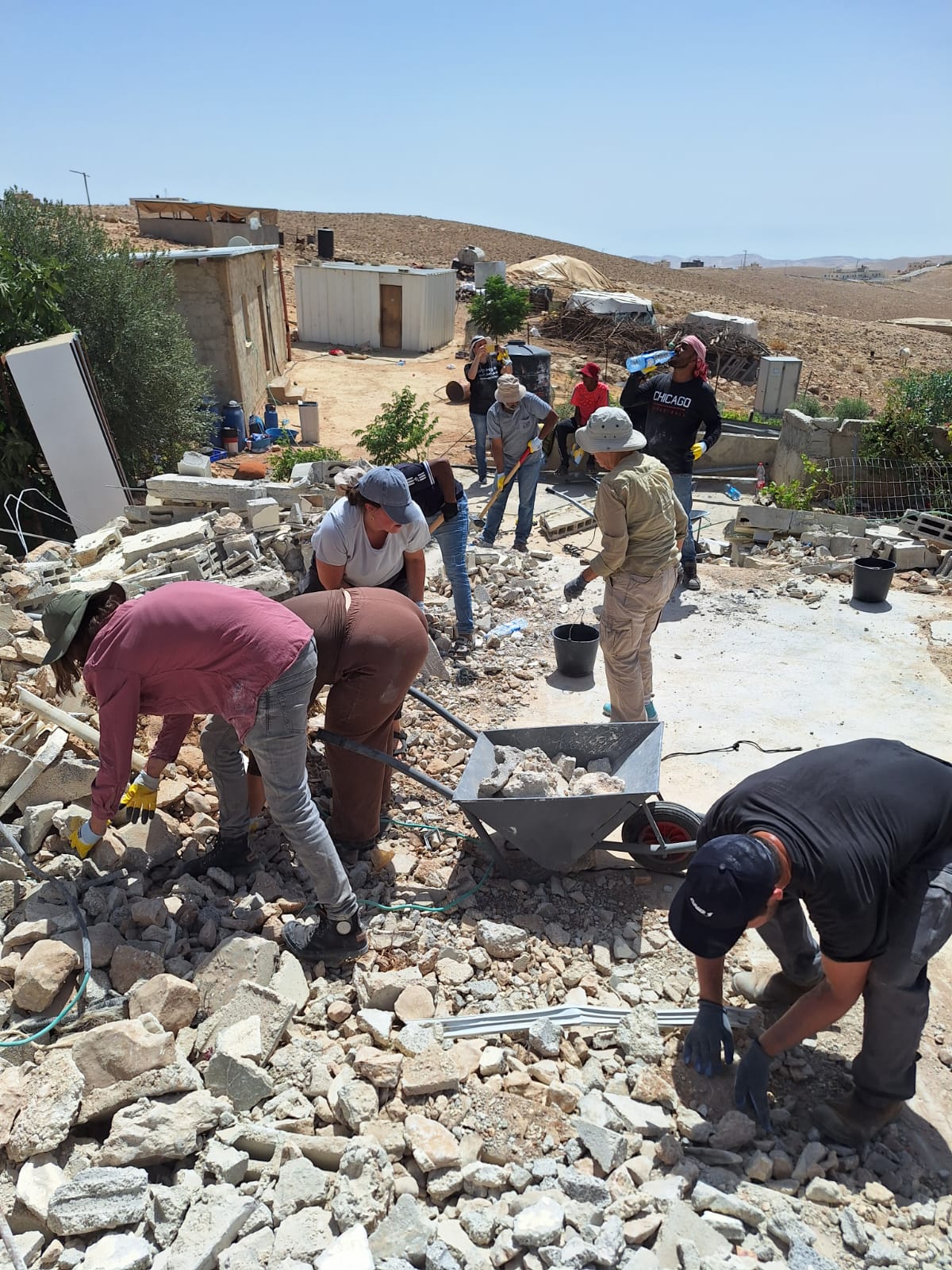
Nor are all encounters alike. A cultural event celebrating coexistence, a shared campaign against home demolitions, and a commercial partnership operating within occupation have different purposes and consequences. Calling everything “dialogue” conceals those differences. Calling every encounter “betrayal” can do the same.
The argument for cooperation
The strongest case for joint work is political, not sentimental. Ending oppression requires challenging the institutions and constituencies that sustain it. Supporters argue that Israelis who confront their own society’s policies can contribute to that change alongside Palestinians.
Standing Together, which organises Jewish and Palestinian citizens of Israel, describes its purpose as opposing occupation and building peace, equality and social justice. Its approach centres on constructing shared political power.
Its constituency matters. Palestinian citizens of Israel face questions of participation and collective organising that differ from those confronting Palestinians under military occupation or refugees abroad. A single instruction about contact cannot erase these circumstances.
The Parents Circle–Families Forum offers another approach. Its bereaved Israeli and Palestinian members oppose occupation and advocate reconciliation as part of a sustainable political settlement. Recognising another family’s humanity, they argue, need not mean accepting the system responsible for its suffering.
Breaking dehumanising narratives and organising across separation are meaningful objectives. Neither, however, automatically demonstrates progress towards equal rights.
The argument against normalisation
Anti-normalisation advocates begin with power. Israelis and Palestinians do not arrive at an encounter with equivalent freedom of movement, political protection or control over their futures. Treating them as two equally responsible communities risks disguising that reality.
The Palestinian Campaign for the Academic and Cultural Boycott of Israel, or PACBI, criticises projects that substitute mutual understanding for Palestinian rights and accountability. Its opposition to Standing Together illustrates how deeply organisations disagree about meaningful solidarity.
PACBI argues that Standing Together’s approach marginalises central Palestinian demands, particularly refugee rights. Standing Together presents joint organising as a means of achieving equality and ending occupation. These are competing political assessments, not positions that should be collapsed into an undisputed verdict.
A joint statement hosted by Al-Haq, addressing initiatives in 2026, makes a wider criticism of “people-to-people” peacebuilding. Signatories include the Palestinian NGO Network, MIFTAH and MAKAN. They argue that donor-backed dialogue can sideline Palestinian agency while leaving structures of oppression intact.
Their challenge is direct: who determines the agenda, who receives funding, and can participants demand accountability without losing their platform?
Engagement is not a single strategy
The Alliance for Middle East Peace, or ALLMEP, supports a network of Israeli and Palestinian civil-society organisations. It advocates investment in cooperation, equality and peacebuilding, arguing that relationships help create support for political agreements.
Critics question whether such programmes change unequal power or make its consequences more manageable. Particular projects therefore require scrutiny beyond their stated intentions.
Standing Together emphasises shared political organising. Parents Circle foregrounds reconciliation through bereavement. Neither should automatically be described as advocating “more normalisation,” a label they need not accept.
Likewise, PACBI and the Al-Haq statement’s signatories should not be reduced to opponents of human contact. Their objections concern the political terms and effects of cooperation.
Co-resistance: a different starting point
Combatants for Peace explicitly describes its work as “co-resistance.” Its principles acknowledge unequal power and commit participants to joint nonviolent action against oppression.
This offers a useful distinction. Coexistence asks how people can live alongside one another. Co-resistance asks what they must change together before coexistence becomes just.
PACBI’s position also leaves room for Israeli participation. Its statement welcomes anti-Zionist Jewish Israelis who affirm Palestinian rights, citing Boycott from Within as an example. Anti-normalisation, in this formulation, is not a nationality-based prohibition on solidarity.
Nevertheless, the language of co-resistance does not settle every dispute. Refugee return, representation, funding and accountability remain substantive tests.
Where the Green Olive Collective stands
The Green Olive Collective’s published principles support Palestinian refugee return, an end to occupation, full equality for Palestinian citizens of Israel, and a democratic future grounded in universal human rights. These commitments provide the context for its educational and solidarity work.
That framework places Palestinian rights, rather than contact for its own sake, at the centre. Green Olive’s tours examine occupation, displacement, the Nakba and unequal citizenship. Its stated approach includes hiring Palestinian guides, arranging stays with families and small guesthouses, and encouraging purchases from local producers.
Its membership programme connects education with advocacy, giving supporters resources to act for Palestinian freedom in their own communities. The Collective’s invitation to “Connect, Learn, Act” therefore links encounters to understanding and political engagement.
These commitments do not exempt Green Olive from scrutiny. The same questions apply to its work as to other initiatives: whose voices shape the encounter, where do resources go, and does participation strengthen Palestinian agency?
Judge the work, not the photograph
A useful assessment asks whether an initiative recognises unequal power, affirms Palestinian rights, allows Palestinians to set priorities, and challenges harmful policies. Funding conditions and political commitments should be transparent.
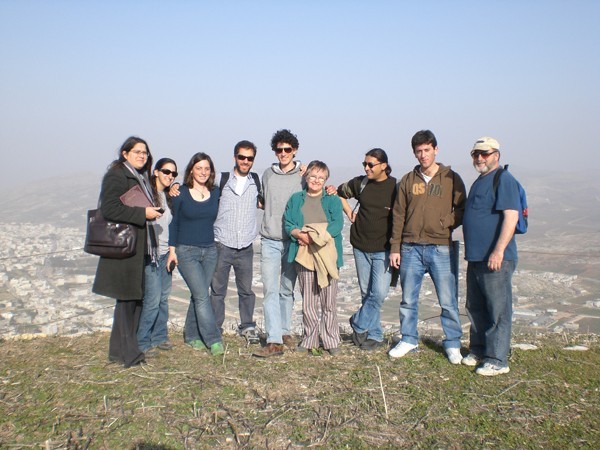
A photograph of Israelis and Palestinians together answers none of those questions.
The choice is not between speaking and silence. It is between engagement that accommodates domination and engagement that confronts it. Cooperation deserves support when it advances freedom, equality and Palestinian agency, not merely because it brings people into the same room.

Comment (0)