
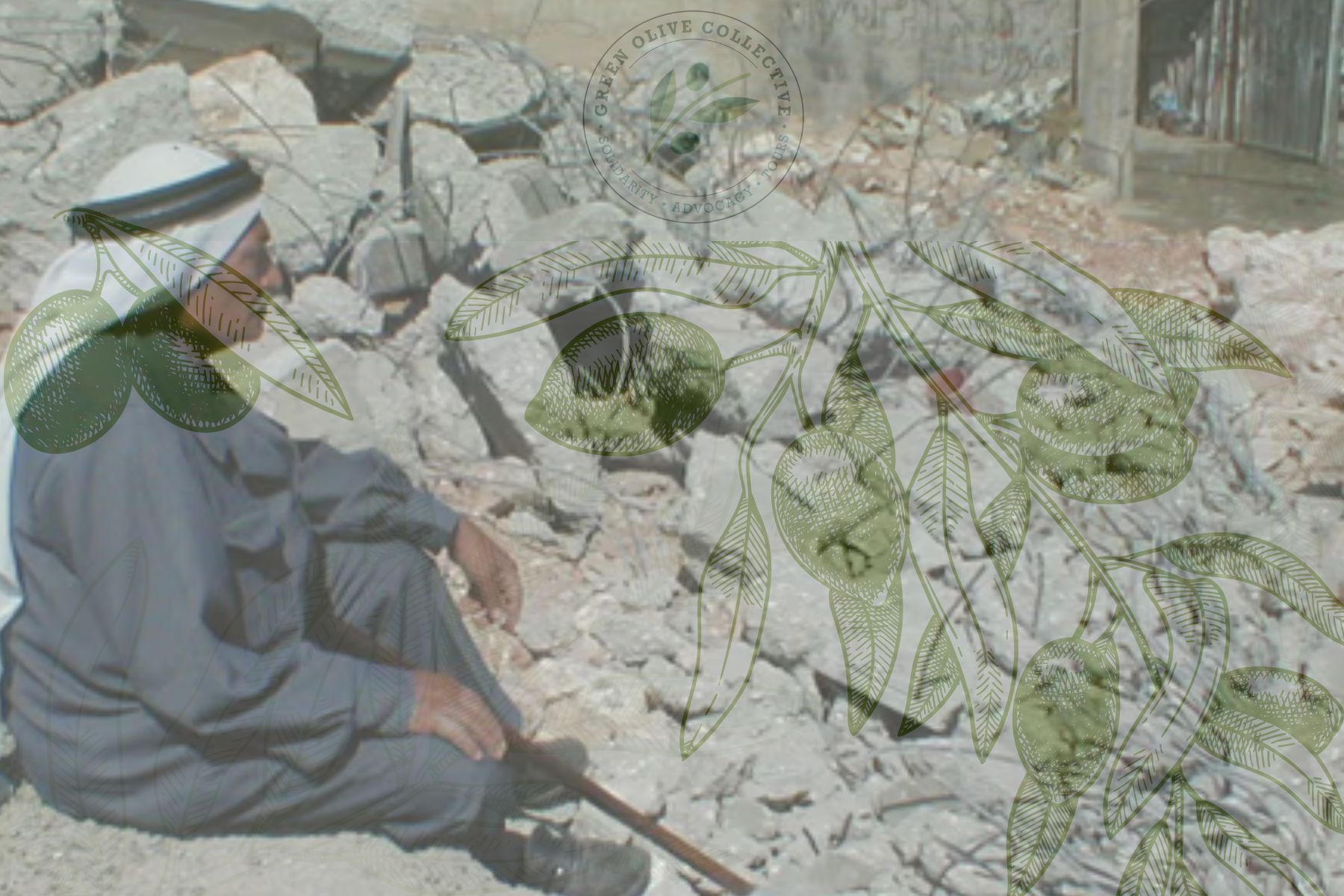
The Dust of Our Ancestors
The ground trembles before the machine arrives.
For Abed, a boy whose life has been measured by the rhythms of the seasons and the endurance of stone, the sound is the roar of a monster.
He stands frozen on the rocky soil of Masafer Yatta in the South Hebron Hills — land where survival is an art perfected over millennia. But today, the dust rising in the wind carries something else: erasure.
A yellow bulldozer inches toward his family home — part shack, part earth, grafted onto the front of a cave that has sheltered generations.
“Sidi,” Abed whispers, clutching his grandfather’s robe. “Why don’t they want us here? What have we done?”
The old man sighs — a sound drawn from deep in the hills.
“They think God has given them the land, and only them.”
Faith, Land, and Memory
“It’s wrong,” Abed says through tears.
“Yes, habibi, it is wrong,” his grandfather replies softly.
“The Qur’an teaches that the land belongs to God alone. We are only khalifah — trustees. We hold it gently for a lifetime, then pass it on.”
He gestures toward the soldiers guarding the bulldozer — young men from Europe, South Africa, and America.
“They forget their own Torah teaches the same — that humans are tenants, not owners.”
The irony is suffocating.
The soldiers do not know who they are displacing.
They do not know that the oral history of the Makhamra clan traces back centuries — with echoes of Jewish roots in Khaybar.
They do not know of candle lighting on quiet evenings.
They do not know that the name Makhamra means “winemakers.”
They do not know of carved mezuzah traces found in stone doorways in Yatta.
History here is layered. Complex. Entwined.
But a bulldozer does not pause for nuance.
The Reality of Masafer Yatta Home Demolitions
The metal bucket slams into the wall.
Abed screams. The women wail. Concrete collapses. Metal twists.
Within minutes, the sanctuary that held meals, laughter, arguments, and dreams becomes gray rubble.
This is not only a home being destroyed.
It is part of a pattern of Masafer Yatta home demolitions affecting Palestinian Bedouin communities across the South Hebron Hills — families whose presence predates modern borders and whose agricultural traditions are rooted in the land.
Olive trees — some decades old — are ripped from the soil.
Roots snap like bones.
Empires have passed through these hills: Romans, Ottomans, British administrators mapping villages in the 1870s. The Bedouin remained.
But today, displacement accelerates.
Do Not Look Away
While the world debates policy, homes are erased in real time.
The need is urgent.
Families in Masafer Yatta are fighting to:
- Stay on their land
- Rebuild demolished homes
- Protect olive groves
- Sustain peaceful co-resistance
This is about survival.
It is about dignity.
It is about preventing the dust of ancestors from becoming permanent silence.
Stand With Masafer Yatta
Please open your heart.
Help Palestinian Bedouin families remain on their land and rebuild what has been destroyed.
👉 Donate now to support families facing demolition:
https://support.greenolivecollective.com/…
In Solidarity,
Anas, Diya, Erez, Fred, Itamar, Jehanne, Mirvate, Mohammad, Yamen, Yaniv, Yahav
The Partners of Green Olive Collective

Comment (0)