
Jocelyn Qassis – June 2026
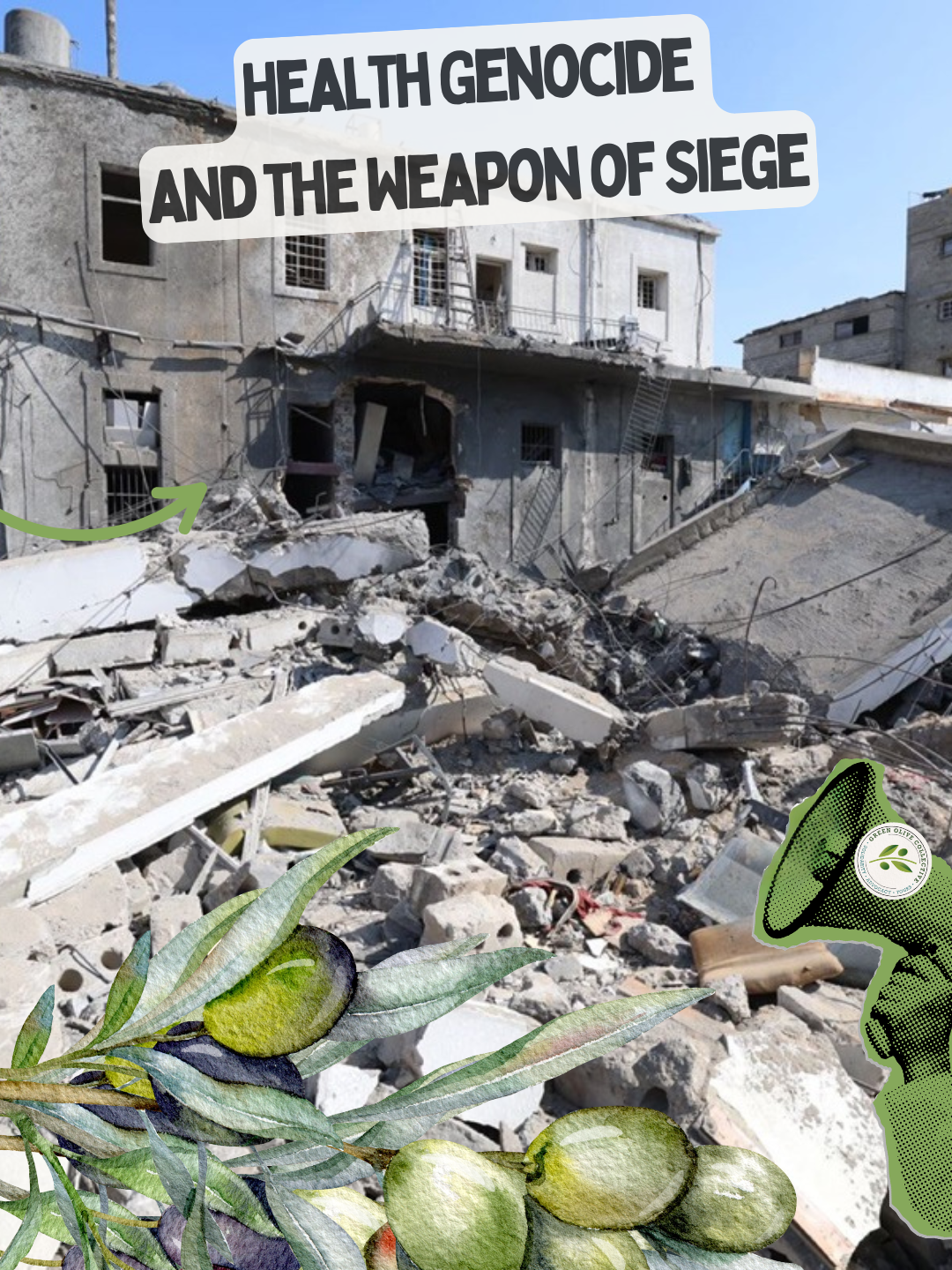
The health system in the Occupied Palestinian Territories, particularly in the Gaza Strip, is experiencing an unprecedented catastrophic collapse, while Palestinians in the West Bank face increasing restrictions on access to basic healthcare. This crisis is not a result of natural circumstances or a temporary shortage, but rather a product of systematic policies aimed at undermining Palestinian life, transforming healthcare from a fundamental right into a denied privilege, in what can be described as “health genocide” [1].
Gaza: A Health System on the Brink
In the Gaza Strip, the ongoing military campaign since October 2023 has led to the near-total destruction of health infrastructure. Most major hospitals have been rendered inoperable, including Kamal Adwan, Indonesian, Hamad Rehabilitation and Prosthetics Hospitals, and the Turkish-Palestinian Friendship Hospital, which provided vital services to cancer patients [2]. The sector suffers from a severe shortage of medicines, medical supplies, and fuel necessary to operate generators, preventing the provision of even the most basic medical services. The World Health Organization has repeatedly warned that the health system is on the verge of collapse, with a rising number of preventable deaths and the spread of epidemics [3].
Statistics released in April 2026 show that deficits in essential medicines reached 50%, medical consumables 57%, and laboratory testing materials 71% [4]. This severe shortage threatens the lives of thousands of patients, especially those with chronic diseases. Cancer patients, estimated at 10,000 in Gaza, face a slow death due to the prevention of travel for treatment abroad and the destruction of specialized hospitals [5]. Kidney dialysis and diabetes patients also face daily deaths due to power outages and lack of essential medical consumables [6].
West Bank: Restricted Access and Fatal Delays
In the West Bank, restricted access to healthcare is evident in the widespread military checkpoints, which impede the movement of patients, medical staff, and ambulances. These restrictions turn a 10-minute journey to the hospital into a four-hour or longer ordeal, leading to fatal delays in receiving treatment, and often preventing patients from reaching specialized hospitals, thus threatening their lives [7]. Reports indicate that the policy of “undermining health” is part of a broader strategy aimed at weakening Palestinian society and controlling its life [8].
Violations of International Law and Accountability
The pattern of Israeli attacks on hospitals and health facilities in Gaza, and the restricted access to healthcare in the West Bank, raises serious concerns about violations of international humanitarian law, which mandates the protection of medical facilities and health personnel during armed conflict. The targeting of hospitals is a war crime, and the siege imposed on Gaza, leading to the collapse of the health system, constitutes a form of collective punishment prohibited internationally [9].
The international community is urged to intervene immediately to halt this collapse, provide urgent medical aid, and ensure all Palestinians have access to their right to healthcare without restrictions. Those responsible for these violations must be held accountable, and necessary support must be provided to rebuild the Palestinian health system, ensuring Palestinians’ right to life and dignity [10].
Legal Classification and Accountability
The systematic destruction of healthcare infrastructure in Gaza, alongside the obstruction of access to medical care in the West Bank, constitutes serious violations of international humanitarian law.
Under the Geneva Conventions, all parties to a conflict are obligated to protect medical facilities, personnel, and patients. Hospitals must never be targeted, and access to care must be ensured at all times.
The repeated attacks on hospitals, the denial of fuel and medical supplies, and the obstruction of patient movement are not isolated incidents. They reflect a pattern of conduct that may amount to:
- War crimes, including the targeting of protected medical infrastructure
- Collective punishment, through the deprivation of essential healthcare services
- Crimes against humanity, where widespread and systematic actions lead to civilian suffering and death
The collapse of the health system in Gaza, driven by blockade and destruction, raises urgent legal questions about accountability.
These violations demand investigation, documentation, and legal action through international mechanisms. Impunity will only deepen the crisis and allow further violations to continue.
Human Impact: Lives Behind the Numbers
Behind every statistic is a life at risk.
Patients undergo surgery without adequate anesthesia. Doctors operate under extreme conditions with limited tools. Families wait outside hospitals with no certainty their loved ones will survive.
Children, the elderly, and those with chronic illnesses face the highest risk. For many, access to healthcare is no longer delayed, but entirely denied.
Failure to act will not only deepen the crisis, but normalize the denial of healthcare as a tool of control.
Access to healthcare is not negotiable. It is a fundamental human right that must be protected without exception.
References:
[1] Undermining Health: Israel and its Systematic Destruction of Palestinian Lives
[2] WHO warns health system at breaking point as hostilities further intensify
[3] Gaza: Health system collapse amid hundreds killed searching for food
[4] Gaza on the brink of health collapse: a catastrophic crisis threatening the lives of thousands of patients
[5] Director of Gaza Health Ministry: Chronic disease patients face death risk
[6] Dangerous alternatives and missing medicines.. How does the drug crisis threaten the lives of Gaza patients?
[7] Pattern of Israeli attacks on Gaza hospitals raises grave concerns

Comment (0)