
Jocelyn Qassis _ June 2026
Culture as a Site of Struggle
The Israeli-Palestinian conflict has never been solely about territory and military power. From its inception, it has been fundamentally a struggle over narrative, history, and identity. The establishment of the State of Israel in 1948 required not only the military conquest of Palestinian territory but also the cultural and historical erasure of Palestinian presence. This erasure has taken multiple forms: the destruction of Palestinian cultural heritage, the appropriation of Palestinian cultural symbols, the rewriting of Palestinian history, and the systematic silencing of Palestinian voices.
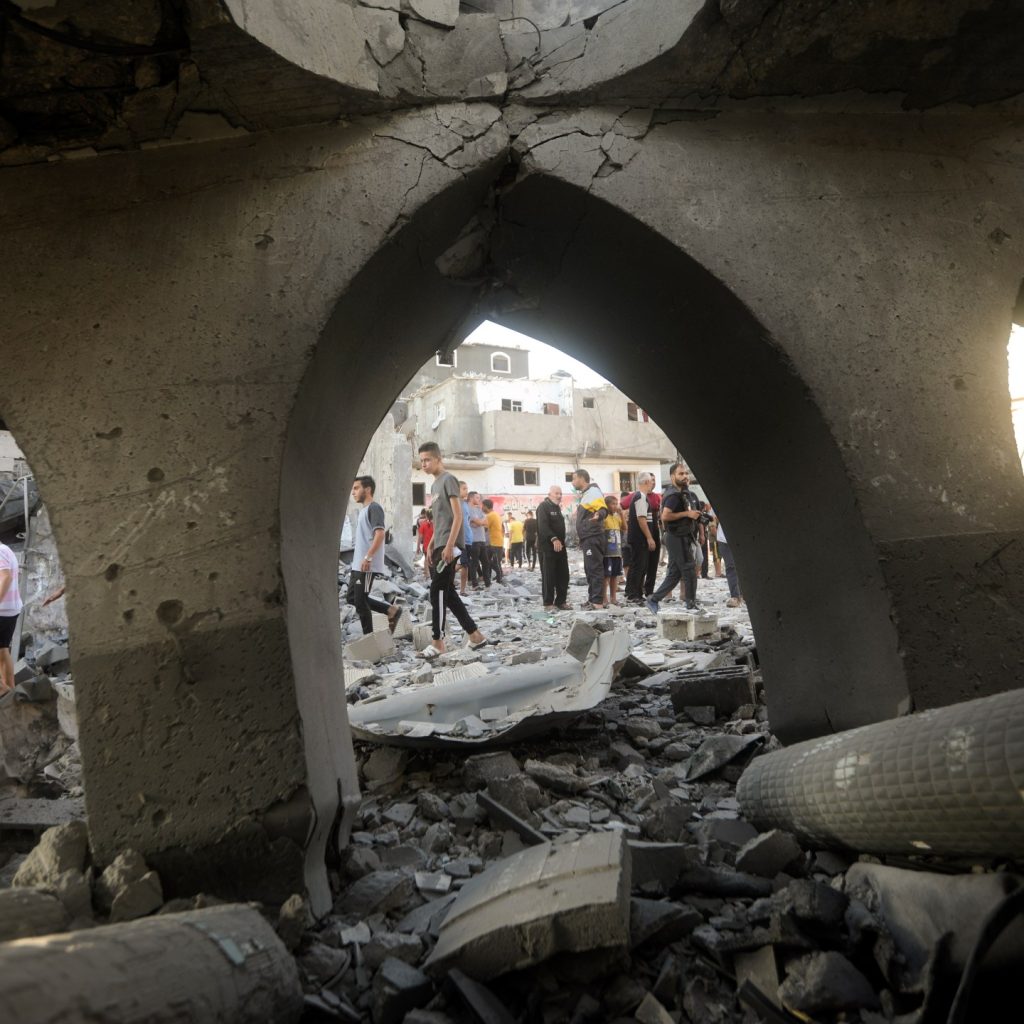
In recent years, and particularly since October 2023, this cultural struggle has intensified dramatically. The targeting of Palestinian intellectuals, artists, writers, and cultural institutions has become systematic and deliberate. The assassination of prominent Palestinian poets, the destruction of cultural centers and museums, the burning of libraries, and the prevention of Palestinian cultural expression have all become tools of Israeli policy.
This article examines the phenomenon of cultural genocide in the Palestinian context, focusing on the systematic targeting of Palestinian intellectuals and cultural figures, the destruction of Palestinian cultural heritage, and the mechanisms through which Palestinian cultural identity is being erased. The analysis demonstrates that cultural genocide is not incidental to the military occupation but rather central to it, and that the targeting of intellectuals and cultural figures is a deliberate strategy to eliminate Palestinian resistance and Palestinian claims to the land.
Defining Cultural Genocide: The Erasure of Identity
The Concept of Cultural Genocide
Cultural genocide, while not formally defined in international law, refers to the systematic destruction or suppression of a people’s culture, including their language, religion, customs, artistic expression, and historical memory. Cultural genocide operates through multiple mechanisms: the destruction of cultural artifacts and heritage sites, the prevention of cultural expression and education, the appropriation and distortion of cultural symbols, and the silencing of cultural voices through violence and intimidation [1].
Cultural genocide differs from physical genocide in that it does not necessarily involve the killing of individuals but rather the killing of a people’s culture and identity. However, cultural genocide and physical genocide are often intertwined; the destruction of a people’s culture is frequently accompanied by violence against individuals and can serve as a precursor to more severe forms of violence [1].
The concept of cultural genocide has been applied to various historical contexts, including the colonization of indigenous peoples in the Americas, the assimilation policies of various states toward minority populations, and the cultural policies of colonial powers. The concept has been recognized by the United Nations as a form of cultural destruction that violates human rights and international law [1].
Cultural Genocide as a Tool of Settler Colonialism
In the Palestinian context, cultural genocide is a tool of settler colonialism. Settler colonialism is a form of colonialism in which the colonizing power seeks to establish permanent settlement in the colonized territory and to replace the indigenous population with settlers from the colonizing state. Settler colonialism requires the displacement or elimination of the indigenous population and the establishment of a new settler society [1].
Cultural genocide serves settler colonialism by erasing the historical and cultural claims of the indigenous population to the land. By destroying Palestinian cultural heritage and silencing Palestinian voices, settler colonialism attempts to create a historical narrative in which the land was empty and uninhabited before Israeli settlement. By appropriating Palestinian cultural symbols and reinterpreting Palestinian history, settler colonialism attempts to incorporate Palestinian culture into Israeli culture, thereby erasing Palestinian distinctiveness [1].
The targeting of Palestinian intellectuals serves a particularly important function in settler colonialism. Intellectuals are the bearers of historical memory and cultural identity. They are the ones who articulate the historical claims of a people to their land and who preserve and transmit cultural traditions. By silencing intellectuals, settler colonialism attempts to break the transmission of historical memory and cultural identity from one generation to the next [1].
The Historical Erasure of Palestinian Culture
The 1948 Nakba and the Destruction of Palestinian Heritage
The displacement of Palestinians in 1948 was accompanied by systematic destruction of Palestinian cultural heritage. Approximately 530 Palestinian villages were destroyed, erasing the physical infrastructure of Palestinian culture. Palestinian homes, which contained family photographs, documents, and cultural artifacts, were destroyed or looted. Palestinian religious sites, including mosques and shrines, were destroyed or converted to Israeli use [1].
Palestinian libraries and archives were systematically looted. Approximately 70,000 books were documented as stolen from Palestinian homes and institutions. These books represented Palestinian intellectual and cultural heritage, including works of literature, history, philosophy, and religious texts. The looting of these libraries was not incidental to military operations but rather a deliberate policy to erase Palestinian intellectual heritage [1].
Palestinian cultural institutions were destroyed or closed. Palestinian newspapers were shut down. Palestinian schools were closed. Palestinian cultural organizations were disbanded. This systematic destruction of cultural institutions severed the transmission of Palestinian culture from one generation to the next [1].
The Appropriation of Palestinian Culture
Simultaneously with the destruction of Palestinian cultural heritage, Israeli society engaged in the appropriation of Palestinian cultural symbols and practices. Palestinian folk dances were appropriated and performed by Israeli dancers, with the Palestinian origin of these dances obscured or denied. Palestinian folk music was appropriated and performed by Israeli musicians. Palestinian cuisine was appropriated and marketed as Israeli cuisine [1].
This appropriation served multiple functions. It allowed Israeli society to incorporate Palestinian cultural elements into Israeli culture while simultaneously denying Palestinian cultural distinctiveness. It created a historical narrative in which Palestinian culture was merely a variant of Israeli culture rather than a distinct culture with its own history and traditions. It also allowed Israeli society to benefit from Palestinian cultural creativity while denying Palestinians the right to cultural self-determination [1].
The Hebraization of Place Names
A particularly significant form of cultural erasure has been the systematic renaming of Palestinian places with Hebrew names. Hundreds of Palestinian towns, villages, and geographic features were given Hebrew names, erasing the Arabic place names that connected Palestinians to their land and history. For example, the Palestinian city of Nablus was given the Hebrew name “Shechem,” the Palestinian city of Ramallah was given the Hebrew name “Rama,” and the Palestinian city of Bethlehem was given the Hebrew name “Beit Lehem” [1].
This renaming served multiple functions. It erased the Arabic language and Arabic cultural identity from the landscape. It created a historical narrative in which the land had always been Hebrew-speaking and Jewish. It made it more difficult for Palestinians to navigate their own land, as place names that had been used for centuries were suddenly replaced with unfamiliar Hebrew names. It also served as a form of psychological colonization, in which Palestinians were forced to learn and use the names imposed by their colonizers [1].
The Targeting of Palestinian Intellectuals
The Function of Intellectuals in Palestinian Society
Palestinian intellectuals—writers, poets, artists, academics, journalists—serve a critical function in Palestinian society. They are the bearers of Palestinian historical memory and cultural identity. They articulate Palestinian claims to the land and Palestinian visions of the future. They preserve and transmit Palestinian cultural traditions. They provide intellectual and cultural resistance to occupation and colonization [1].
Palestinian intellectuals have played a central role in Palestinian national movements. Palestinian poets such as Mahmoud Darwish and Samih al-Qasim articulated Palestinian national identity and Palestinian resistance to occupation. Palestinian novelists such as Ghassan Kanafani and Emile Habibi documented Palestinian experiences of displacement and occupation. Palestinian artists and musicians have expressed Palestinian suffering and Palestinian aspirations [1].
The critical role of intellectuals in Palestinian society means that the targeting of intellectuals is a particularly effective strategy for suppressing Palestinian resistance and Palestinian claims to the land. By silencing intellectuals, occupation authorities attempt to break the transmission of Palestinian historical memory and cultural identity. By eliminating intellectuals, occupation authorities attempt to eliminate the articulation of Palestinian national aspirations [1].
Historical Targeting of Palestinian Intellectuals
The targeting of Palestinian intellectuals is not new but rather has a long history. Ghassan Kanafani, one of the most important Palestinian novelists and political theorists, was assassinated in 1972 by a car bomb planted by Israeli agents. Kanafani’s assassination was a deliberate attempt to silence one of the most powerful voices of Palestinian resistance [1].
Naji al-Ali, a renowned Palestinian cartoonist whose political cartoons articulated Palestinian suffering and Palestinian resistance, was assassinated in 1987 by a gunman widely believed to be acting on behalf of Israeli or Palestinian security forces. Al-Ali’s assassination was a deliberate attempt to silence one of the most powerful voices of Palestinian political critique [1].
Faisal Husseini, a prominent Palestinian intellectual and political leader, died in 2001 under circumstances that many Palestinians believe involved foul play. Husseini had been a leading voice for Palestinian rights and Palestinian self-determination [1].
These historical assassinations of Palestinian intellectuals demonstrate that the targeting of intellectuals is a long-standing strategy of Israeli policy. The assassinations serve multiple functions: they eliminate powerful voices of Palestinian resistance, they intimidate other intellectuals into silence, and they demonstrate to Palestinians that intellectual and cultural expression can be dangerous [1].
The Assassination of Refaat Alareer: A Case Study in Cultural Genocide
The Life and Work of Refaat Alareer
Refaat Alareer was a Palestinian poet, writer, and academic who lived and worked in Gaza. Alareer was born in 1982 and received his education in Gaza and in the United States. He returned to Gaza and became a professor of English literature at the Islamic University of Gaza, where he taught for many years [1].
Alareer was not merely an academic but also a prominent cultural figure and activist. He was a published poet whose work addressed Palestinian suffering, Palestinian resistance, and Palestinian aspirations for freedom. His poetry was widely read in Palestinian and Arab intellectual circles. His work was translated into multiple languages and was read internationally [1].
Beyond his work as a poet, Alareer was a cultural activist. In 2015, he founded the “We Are Not Numbers” project, an initiative designed to amplify Palestinian voices and to counter the dehumanization of Palestinians in international media. The project connected young Palestinian writers in Gaza with mentors in the diaspora and internationally, providing them with opportunities to publish their writing and to reach international audiences [1].
The “We Are Not Numbers” project was particularly significant because it represented an attempt to reclaim Palestinian narrative and to challenge the dominant international narrative about Palestinians. By providing young Palestinians with platforms to tell their own stories, the project challenged the representation of Palestinians as mere statistics or victims and instead presented Palestinians as complex human beings with their own perspectives and aspirations [1].
The Assassination
On November 14, 2023, Refaat Alareer was killed in an Israeli airstrike that targeted his sister’s home in the Shuja’iyya neighborhood of Gaza City. The airstrike destroyed the building, killing Alareer and several other family members. The airstrike appeared to be deliberately targeted at Alareer, as there was no indication that the building was being used for military purposes [1].
The assassination of Alareer was not incidental to military operations but rather appeared to be a deliberate targeting of a prominent Palestinian intellectual. Alareer had been a vocal critic of Israeli policies and a prominent voice for Palestinian rights. His “We Are Not Numbers” project had been particularly effective in amplifying Palestinian voices internationally. The assassination of Alareer can be understood as a deliberate attempt to silence a powerful voice of Palestinian resistance and Palestinian cultural expression [1].
The Final Poem: “If I Must Die”
Weeks before his assassination, Refaat Alareer wrote a poem titled “If I Must Die.” The poem, which was published shortly after his death, became an international symbol of Palestinian resistance and Palestinian dignity in the face of overwhelming violence. The poem reads:
“If I must die,
you must live
to tell my story
to sell my things
and give the money to the boys
to buy them books and shoes.
If I must die,
let it bring hope,
let it be a tale.
If I must die,
let the last word I utter be:
‘I love you.’
It is almost the final hour.
Our clock is ticking.”
The poem captures the experience of living under occupation and the constant threat of death. It also expresses a profound commitment to life, to hope, and to love in the face of death. The poem’s final lines—”It is almost the final hour. Our clock is ticking”—proved prophetic, as Alareer was killed just weeks after writing the poem [1].
The poem has been translated into dozens of languages and has been read by millions of people around the world. It has become a symbol of Palestinian resistance and Palestinian dignity. The poem’s power lies in its ability to articulate Palestinian suffering while simultaneously affirming Palestinian humanity and Palestinian hope. In this sense, the assassination of Alareer has not silenced his voice but rather has amplified it, as his final poem has reached a global audience far larger than it would have reached had he lived [1].
The Destruction of Palestinian Cultural Infrastructure
The Targeting of Cultural Institutions
Beyond the assassination of individual intellectuals, Israeli military operations have systematically targeted Palestinian cultural institutions. Libraries have been destroyed, erasing Palestinian intellectual heritage. Museums have been destroyed, erasing Palestinian historical artifacts. Cultural centers have been destroyed, eliminating spaces where Palestinian cultural expression could occur [1].
In Gaza, the destruction of cultural institutions has been particularly severe. The Gaza National Museum, which housed Palestinian historical artifacts and documents, was destroyed in Israeli military operations. The Al-Shifa Hospital, which housed important Palestinian medical and scientific records, was destroyed. Multiple libraries and archives containing Palestinian historical documents were destroyed [1].
The destruction of these cultural institutions serves multiple functions. It erases Palestinian historical memory by destroying the physical artifacts and documents that embody that memory. It eliminates spaces where Palestinian cultural expression could occur. It demonstrates to Palestinians that their cultural heritage is not valued and can be destroyed with impunity [1].
The Prevention of Cultural Expression
Beyond the destruction of cultural institutions, Israeli military operations and occupation policies have prevented Palestinian cultural expression. Curfews and movement restrictions have prevented Palestinians from gathering for cultural events. Military operations have prevented the functioning of cultural institutions. Restrictions on the import of materials have prevented the production of cultural goods [1].
In Gaza, the near-total closure has made it nearly impossible for Palestinians to engage in cultural expression. The absence of electricity has made it impossible to operate theaters, cinemas, and concert halls. The destruction of cultural spaces has eliminated venues for cultural events. The trauma of bombardment and displacement has made it difficult for Palestinians to engage in cultural expression [1].
The Concept of Memoricide: Killing Memory
The Deliberate Erasure of Historical Memory
The systematic destruction of Palestinian cultural heritage, the targeting of Palestinian intellectuals, and the prevention of Palestinian cultural expression can be understood as “memoricide”—the deliberate killing of a people’s collective memory. Memoricide operates by destroying the physical artifacts, documents, and spaces that embody collective memory. It operates by silencing the voices that articulate and transmit collective memory. It operates by preventing the transmission of memory from one generation to the next [1].
Memoricide is a particularly effective tool of colonization because it breaks the historical continuity that connects a people to their land. By erasing historical memory, colonizers can create a historical narrative in which the land was empty and uninhabited before colonization. By erasing historical memory, colonizers can deny the historical claims of indigenous peoples to their land [1].
In the Palestinian context, memoricide has been a central strategy of Israeli policy. By destroying Palestinian historical artifacts and documents, Israeli authorities have attempted to erase the historical evidence of Palestinian presence on the land. By silencing Palestinian intellectuals, Israeli authorities have attempted to prevent Palestinians from articulating their historical claims to the land. By preventing Palestinian cultural expression, Israeli authorities have attempted to prevent Palestinians from transmitting their historical memory to the next generation [1].
Palestinian Cultural Resistance: Sumud and the Persistence of Memory
The Concept of Sumud (Steadfastness)
Despite systematic efforts to erase Palestinian culture and Palestinian historical memory, Palestinian cultural resistance persists. This resistance is often articulated through the concept of “Sumud,” which can be translated as “steadfastness” or “perseverance.” Sumud represents a commitment to remaining on the land, to maintaining Palestinian identity, and to resisting colonization through cultural and social means [1].
Palestinian cultural resistance through Sumud takes multiple forms. The preservation of Palestinian folk traditions, including folk dances, folk music, and folk crafts, represents a form of cultural resistance. The continuation of Palestinian literary and artistic production represents a form of cultural resistance. The transmission of Palestinian historical memory from one generation to the next represents a form of cultural resistance [1].
Contemporary Forms of Palestinian Cultural Resistance
Contemporary Palestinian cultural resistance has taken innovative forms adapted to the conditions of occupation and colonization. Palestinian hip-hop artists have used rap music to articulate Palestinian experiences of occupation and Palestinian aspirations for freedom. Palestinian filmmakers have produced documentaries and feature films that present Palestinian perspectives on occupation and resistance. Palestinian visual artists have created art that expresses Palestinian suffering and Palestinian hope [1].
Palestinian social media activists have used digital platforms to amplify Palestinian voices and to challenge dominant international narratives about Palestinians. Palestinian journalists have continued to document Israeli violations of Palestinian rights despite the dangers of doing so. Palestinian writers have continued to produce literature that expresses Palestinian experiences and Palestinian perspectives [1].
The assassination of Refaat Alareer and the destruction of cultural institutions have not silenced Palestinian cultural expression but rather have intensified it. Palestinian artists and intellectuals have responded to the assassination of Alareer by amplifying his message and by continuing the work that he began. The “We Are Not Numbers” project has continued, with young Palestinian writers continuing to tell their stories and to reach international audiences [1].
Conclusion: The Ongoing Struggle for Cultural Survival
The systematic targeting of Palestinian intellectuals, the destruction of Palestinian cultural heritage, and the prevention of Palestinian cultural expression represent a form of cultural genocide designed to erase Palestinian identity and Palestinian historical memory. The assassination of Refaat Alareer exemplifies this strategy; by killing a prominent voice of Palestinian resistance and Palestinian cultural expression, Israeli authorities attempted to silence Palestinian resistance and to prevent the transmission of Palestinian historical memory [1].
Yet the assassination of Alareer has not achieved its intended effect. Instead, Alareer’s final poem has become a global symbol of Palestinian resistance and Palestinian dignity. Palestinian cultural resistance has intensified rather than diminished. Palestinian intellectuals and artists have continued to produce work that expresses Palestinian experiences and Palestinian aspirations [1].
The struggle for Palestinian cultural survival is inseparable from the broader struggle for Palestinian political freedom and Palestinian self-determination. As long as Palestinians are denied the right to self-determination and are subjected to occupation and colonization, Palestinian culture will be under threat. However, as long as Palestinians continue to produce culture and to transmit historical memory, Palestinian identity will persist, and Palestinian claims to the land will remain alive [1].
References:
[1] Tricontinental Institute for Social Research. “Despite Everything: Cultural Resistance for a Free Palestine.” November 2025. Available at: https://thetricontinental.org/dossier-cultural-resistance-palestine/
[2] Arab Center Washington DC. “Palestinian Cultural Resistance in the Service of the National Project.” August 2024. Available at: https://arabcenterdc.org/resource/palestinian-cultural-resistance-in-the-service-of-the-national-project/
[3] Said, Edward W. “Culture and Imperialism.” Knopf, 1993.
[4] Kanafani, Ghassan. “On Zionist Literature.” Journal of Palestine Studies, 1967.
[5] Pappe, Ilan. “The Ethnic Cleansing of Palestine.” Oneworld Publications, 2006.

Comment (0)