
Jocelyn Qassis _ July 2026
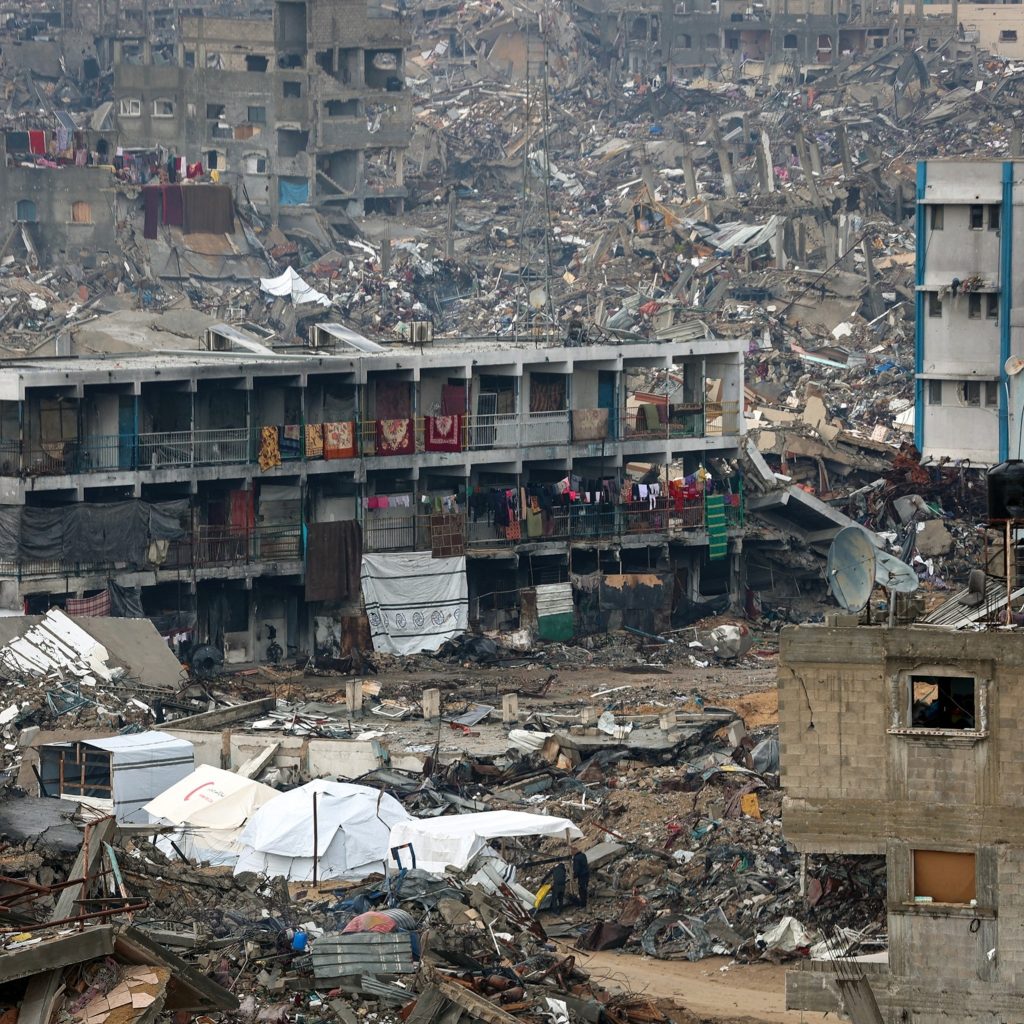
Forced displacement and ethnic cleansing represent the most severe violations of international humanitarian law and constitute crimes against humanity under the Rome Statute of the International Criminal Court. Yet these terms, while legally precise, often fail to capture the human reality of displacement, the sudden loss of home, the trauma of flight, the uncertainty of refuge, and the permanent rupture of community and identity that accompanies forced displacement.
The Israeli occupation of Palestinian territories has been characterized since its inception by policies and practices designed to displace Palestinian populations and replace them with Israeli settlers. What began in 1948 with the displacement of approximately 750,000 Palestinians during the creation of the State of Israel has continued through various mechanisms and intensities for over seven decades. The period from 2023 to 2026, however, represents a qualitatively new phase in this process, characterized by an unprecedented scale of displacement, the use of overwhelming military force, and the explicit abandonment of any pretense that displacement is incidental rather than central to Israeli policy.
This comprehensive analysis examines forced displacement and ethnic cleansing in the Palestinian territories, tracing both the historical continuum of displacement and the specific mechanisms and scale of displacement in the 2023-2026 period. The analysis draws on documentation from international human rights organizations, UN bodies, Palestinian civil society organizations, medical professionals, and survivor testimonies to construct a detailed picture of how displacement operates as a structural component of Israeli territorial control.
Historical Context the Continuum of Displacement
The 1948 Nakba: The Original Displacement and Narrative Erasure
The displacement of Palestinian populations did not begin in 2023 but rather in 1948, with the creation of the State of Israel. During the 1948 Arab-Israeli War, approximately 750,000 Palestinians were displaced from their homes and lands, becoming refugees in neighboring countries and in the territories that would later become the West Bank and Gaza Strip. This displacement was not incidental to the establishment of Israel but rather central to the territorial and demographic transformation that created the Jewish state.
The displacement of 1948 was accomplished through a combination of direct military force, psychological warfare, and massacres that created panic among the Palestinian population. Documented massacres, such as the massacre at Deir Yassin (April 1948) where approximately 100 Palestinian civilians were killed, created a climate of fear that encouraged Palestinian flight. Simultaneously, Israeli military forces systematically destroyed Palestinian villages to prevent Palestinian return, erasing the physical infrastructure of Palestinian presence. According to Palestinian historians, approximately 530 Palestinian villages were completely destroyed, with their names erased from maps and replaced with Hebrew names [1].
The displacement of 1948 was accompanied by the systematic confiscation of Palestinian property. Approximately 5.5 million dunams (approximately 550,000 hectares) of Palestinian land were confiscated and transferred to Israeli state ownership or to Jewish immigrants. Palestinian homes, businesses, and agricultural land were appropriated by the Israeli state and distributed to Jewish immigrants, fundamentally altering the demographic and territorial composition of the territory. This confiscation was not limited to land; Palestinian cultural heritage, including books, documents, and artifacts, were looted or destroyed [1].
Critically, the 1948 displacement was not presented as displacement but rather as the “natural” outcome of war or as a consequence of Palestinian choice to flee. This narrative obscured the systematic nature of the displacement and the deliberate policies that produced it. Israeli and Western narratives portrayed the displacement as an unfortunate but inevitable consequence of conflict, rather than as a deliberate policy of ethnic cleansing. This same narrative strategy continues to be employed today, with displacement presented as an unfortunate consequence of security operations rather than as a deliberate policy objective.
The 1948 Nakba created a refugee population that has grown to over 5 million people today, with the vast majority living in refugee camps in neighboring countries and in the occupied Palestinian territories. These refugees have been denied the right to return to their homes for over 75 years, in violation of UN Resolution 194 and international law. The denial of the right of return represents a continuation of the ethnic cleansing that began in 1948.
Displacement in the Post-1967 Period: Slow-Motion Ethnic Cleansing:
Following the 1967 Six-Day War, Israel occupied the West Bank and Gaza Strip. The occupation was initially presented as temporary, pending a political settlement. However, the establishment and expansion of Israeli settlements in the occupied territories made clear that Israel intended permanent territorial control. The establishment of settlements necessitated the displacement of Palestinian populations from land designated for settlement expansion.
The displacement in the post-1967 period took multiple forms. In some cases, Palestinians were directly expelled from land designated for settlement expansion. In other cases, Palestinians were prevented from accessing their land through military restrictions, settler violence, or administrative procedures. In still other cases, Palestinians were gradually marginalized through economic policies and restrictions on development, encouraging emigration. This form of displacement gradual, administrative, and less visible than military expulsion has been described as “slow-motion ethnic cleansing.”
By the early 2000s, approximately 250,000 Palestinians had been displaced from the West Bank due to settlement expansion, military operations, and administrative restrictions. This displacement was accompanied by the construction of the Israeli separation barrier (often called the “wall”), which physically separated Palestinians from their land and created new barriers to Palestinian movement and economic activity. The barrier, which was built primarily on Palestinian land, further entrenched Palestinian displacement and territorial fragmentation.
The mechanisms of displacement in the post-1967 period included:
Military Orders: Israeli military authorities issued military orders that restricted Palestinian construction, agriculture, and economic activity in Area C (which comprises 60% of the West Bank). These military orders made it increasingly difficult for Palestinians to maintain their presence on the land.
Administrative Procedures: Israeli authorities used administrative procedures to deny Palestinians building permits, to demolish Palestinian homes, and to restrict Palestinian movement. Between 1967 and 2023, Israeli authorities demolished approximately 50,000 Palestinian homes, displacing hundreds of thousands of Palestinians.
Settler Violence: Israeli settlers, often with the protection and support of Israeli military forces, perpetrated violence against Palestinians to intimidate them and to force them to abandon their land.
Economic Marginalization: Israeli policies restricted Palestinian economic activity, making it difficult for Palestinians to earn a livelihood and encouraging emigration.
Land Confiscation: Israeli authorities confiscated Palestinian land through military orders, through declarations of “state land,” and through settlement expansion.
These mechanisms operated together to create conditions of insecurity and marginalization that encouraged Palestinian emigration and facilitated Israeli settlement expansion.
The Gaza Nakba, Displacement at Unprecedented Scale (2023-2026)
The Scale and Scope of Displacement:
The events that began in October 2023 and continued through 2026 represent a qualitatively new phase of displacement, characterized by unprecedented scale and intensity. The Israeli military operations in Gaza, which began following the October 7, 2023, attack by Hamas, resulted in the displacement of the vast majority of Gaza’s population. According to the United Nations, approximately 90% of Gaza’s population nearly 1.8 million people has been displaced from their homes at some point during the conflict.
This figure requires contextualization. In many cases, Palestinians have been displaced multiple times, fleeing from one area to another as military operations expanded. The UN estimates that approximately 1.5 million Palestinians are currently in need of emergency shelter, indicating that they have no stable housing and are living in makeshift camps, damaged buildings, or with relatives in overcrowded conditions. Some families have been displaced 5, 6, or even 7 times as military operations have expanded across Gaza.
The displacement in Gaza is not incidental to military operations but rather appears to be a deliberate policy objective. Israeli military directives have instructed civilians to evacuate from certain areas, and then those areas have been subjected to intensive bombardment. This pattern of evacuation followed by bombardment has been repeated across Gaza, creating a situation where Palestinians are forced to flee from one area to another, with each area subsequently subjected to military attack. The pattern suggests that the purpose of evacuation orders is not to protect civilians but rather to concentrate the civilian population in smaller areas where they can be more easily targeted.
Destruction of Infrastructure and Prevention of Return
The scale of destruction in Gaza is unprecedented in the post-World War II era. By April 2025, the United Nations estimated that 92% of all residential buildings in Gaza had been damaged or destroyed. This figure is not merely a statistic but represents the systematic destruction of the physical infrastructure of Palestinian life, homes, schools, hospitals, markets, and community spaces. The destruction includes:
Residential Buildings: Approximately 220,000 residential buildings have been damaged or destroyed, leaving hundreds of thousands of Palestinians homeless or living in partially destroyed structures.
Schools and Universities: Approximately 90% of schools in Gaza have been damaged or destroyed. The Islamic University of Gaza, which was the primary institution of higher education in Gaza, has been largely destroyed.
Hospitals and Healthcare Facilities: Approximately 70% of hospitals and healthcare facilities have been damaged or destroyed, leaving the population without access to medical care.
Water and Sanitation Infrastructure: Water treatment facilities, sewage treatment plants, and water distribution networks have been destroyed, leaving the population without access to clean water.
Agricultural Infrastructure: Farmland has been destroyed, agricultural equipment has been destroyed, and farmers have been prevented from accessing their land, destroying Gaza’s agricultural capacity.
The destruction of residential infrastructure serves a critical function in preventing Palestinian return. Even if military operations were to cease, the absence of housing would make return impossible. The UN estimates that it would take decades to rebuild Gaza’s residential infrastructure, and that the cost of reconstruction would exceed $50 billion. The World Bank estimates that the reconstruction would take 80 years if current funding levels are maintained.
Simultaneously, Israeli authorities have prevented Palestinians from returning to areas from which they were displaced. Military operations have continued in areas from which civilians were evacuated, and Israeli authorities have established restrictions on Palestinian movement that prevent return to displaced persons’ areas of origin. The combination of destruction and movement restrictions has created a situation where displacement appears to be permanent. This suggests that the destruction is not incidental to military operations but rather a deliberate strategy to make return impossible.
Humanitarian Catastrophe: The Human Cost of Displacement
The displacement of 90% of Gaza’s population has created an unprecedented humanitarian crisis. Displaced persons are living in overcrowded camps with inadequate shelter, sanitation, and access to food and water. Disease has spread rapidly in these conditions, with outbreaks of cholera, hepatitis, and other infectious diseases documented in displacement camps. The humanitarian situation has been described by international humanitarian organizations as apocalyptic.
Children and Displacement: Children have been particularly affected by displacement. According to UNICEF, approximately 1 million children in Gaza have been displaced, with many experiencing severe trauma. The displacement has disrupted education, with schools destroyed and children unable to attend school. The psychological impact of displacement on children is severe, with widespread reports of anxiety, depression, and post-traumatic stress disorder. Many children have lost family members to the violence and are experiencing complex trauma that will require years of psychological support.
Women and Girls: Women and girls have faced particular vulnerabilities in displacement camps. The absence of adequate sanitation facilities and the overcrowded conditions have created conditions conducive to sexual violence. UNFPA has documented increased rates of sexual violence against women and girls in displacement camps, with perpetrators including both armed groups and individuals taking advantage of the breakdown of law and order. Pregnant women have given birth in camps without access to medical care, resulting in maternal deaths and complications that could have been prevented.
Elderly and Disabled: Elderly persons and persons with disabilities have faced particular difficulties in displacement camps. Many elderly persons have died from preventable causes due to lack of access to medical care and adequate shelter. Persons with disabilities have been unable to access the assistance they require and have been left behind or abandoned in some cases.
Psychosocial Impact: The displacement has created severe psychosocial trauma among the population. Survivors describe experiencing nightmares, flashbacks, anxiety, and depression. Many describe feeling a sense of hopelessness and despair about the future. Children describe being afraid to sleep due to fear of bombardment. Families describe being separated and not knowing if their relatives are alive or dead.
Part Three: Forced Displacement in the West Bank the Silent Ethnic Cleansing
The Mechanisms of Displacement: A Multi-Layered Strategy
While the displacement in Gaza has been dramatic and highly visible, displacement in the West Bank has been more gradual and less visible, but no less systematic. The mechanisms of displacement in the West Bank include settler violence, military restrictions on Palestinian movement and development, land confiscation, and administrative procedures that marginalize Palestinian communities. These mechanisms operate together to create conditions that encourage Palestinian emigration and facilitate Israeli settlement expansion.
Settler Violence as a Displacement Tool: Settler violence has been a primary mechanism of displacement in the West Bank. According to B’Tselem, Israeli settlers perpetrate an average of 50 violent incidents per week against Palestinians in the West Bank. These incidents include shooting at Palestinians, burning Palestinian property, destroying Palestinian agricultural infrastructure, and blocking Palestinian access to water sources and grazing land. The violence is often directed at Palestinian communities adjacent to Israeli settlements, with the apparent goal of forcing Palestinians to abandon their land.
The Israeli state facilitates and protects settler violence through multiple mechanisms. Israeli military forces provide armed escorts for settlers entering Palestinian areas, establish military checkpoints that restrict Palestinian movement while allowing settler movement, and conduct military operations that are coordinated with settler attacks. In many documented cases, Israeli soldiers have stood by while settlers attacked Palestinians, or have actively participated in such attacks. This state protection of settler violence suggests that the violence is not incidental but rather a deliberate strategy to displace Palestinians.
Military Restrictions on Development: Military restrictions on Palestinian movement and development serve to marginalize Palestinian communities and encourage emigration. Area C, which comprises 60% of the West Bank, is under exclusive Israeli military and administrative control. Palestinians in Area C face severe restrictions on construction, agriculture, and economic activity. These restrictions have made life in Area C increasingly difficult, encouraging Palestinians to leave.
According to the Israeli human rights organization B’Tselem, Palestinians are granted construction permits for only 1-2% of applications in Area C, while Israeli settlers receive permits for approximately 95% of applications. This discriminatory permitting system makes it impossible for Palestinians to build homes or to expand their communities, while facilitating Israeli settlement expansion.
Land Confiscation and “State Land” Declarations: Land confiscation has been accelerated through the declaration of Palestinian land as “state land” and through military orders that restrict Palestinian access to land. The Israeli Civil Administration has declared vast areas of Palestinian land as “state land,” which can then be allocated to Israeli settlements. Simultaneously, military orders have restricted Palestinian access to land for agriculture and grazing, effectively confiscating land without formal legal procedures.
In February 2026, the Israeli government allocated over 244 million Israeli shekels to establish a government mechanism to facilitate land registration in Area C, effectively transferring land registration powers from the civil administration to the Israeli Ministry of Justice. This decision amounts to de facto annexation under Israeli law, as approximately 58% of land in Area C remains unregistered, and Palestinians face nearly insurmountable obstacles to prove land ownership due to Israeli interpretations of archaic Ottoman land laws.
Administrative Procedures and Home Demolitions: Israeli authorities use administrative procedures to deny Palestinians building permits, to demolish Palestinian homes, and to restrict Palestinian movement. Between 1967 and 2023, Israeli authorities demolished approximately 50,000 Palestinian homes, displacing hundreds of thousands of Palestinians. Since 2023, the pace of home demolitions has accelerated, with hundreds of Palestinian homes demolished annually.
Home demolitions serve multiple functions in the displacement strategy. They eliminate Palestinian housing, making it impossible for Palestinians to maintain their presence on the land. They create a climate of fear and insecurity that encourages Palestinian emigration. They demonstrate Israeli state power and Palestinian powerlessness. They make land available for Israeli settlement expansion.
Case Study: The Displacement of Ras Ein al-Ouja: A Microcosm of Ethnic Cleansing
The forced displacement of the Ras Ein al-Ouja community near Jericho in January 2026 provides a detailed illustration of how ethnic cleansing operates in the West Bank. Ras Ein al-Ouja is a Bedouin community that has inhabited the area for generations. The community consists of approximately 122 families comprising over 600 individuals who depend on herding and agriculture for their livelihoods. The community has deep historical roots in the area, with oral histories indicating that the community has inhabited the area for centuries.
The Escalation of Settler Attacks: The Ras Ein al-Ouja community is located in Area C, adjacent to the Mitzpe Jericho settlement. Beginning in late 2024, settlers from Mitzpe Jericho intensified attacks on the Ras Ein al-Ouja community. These attacks included shooting livestock (resulting in the death of hundreds of animals), destroying water infrastructure (including a well that the community had constructed at significant expense), blocking Palestinian access to grazing land, and direct physical assaults on community members. The attacks were not random but rather appeared to be coordinated operations designed to force the community to abandon the area.
State Coordination and Protection: The attacks on Ras Ein al-Ouja were not random acts of individual settlers but rather appeared to be coordinated operations. Israeli military forces were present during many of the attacks but did not intervene to stop them. In some cases, Israeli soldiers appeared to coordinate with settlers, providing information about Palestinian movement or blocking Palestinian escape routes. In at least one documented incident, Israeli soldiers provided armed protection to settlers while they attacked Palestinian livestock and infrastructure.
The Flight: In January 2026, following a particularly intense wave of settler attacks, the Ras Ein al-Ouja community decided to flee the area. The displacement occurred in freezing winter temperatures, with families forced to abandon their homes, livestock, and most of their possessions. The community fled to Jericho, where they are currently living in makeshift shelters in a displacement camp. Families described the experience as traumatic, with children crying as they left their homes, not knowing if they would ever return.
Prevention of Return: Following the displacement, Israeli authorities issued demolition orders against Palestinian structures in Ras Ein al-Ouja, including homes and water infrastructure. These demolition orders prevent the community from returning and rebuilding. Simultaneously, Israeli authorities began facilitating settler access to the land previously occupied by the Ras Ein al-Ouja community. The Israeli military established a new road connecting Mitzpe Jericho to the area, facilitating settler movement and indicating that the area is being incorporated into the settlement.
The Pattern: The displacement of Ras Ein al-Ouja follows the standard pattern of ethnic cleansing: settler violence creates conditions of insecurity, the Palestinian community is forced to flee, Israeli authorities prevent return through demolition orders and movement restrictions, and Israeli settlers are facilitated access to the vacated land. This pattern has been repeated in 21 documented displacements of Palestinian communities in 2025 alone, and hundreds of times since 1967.
Testimonies from Displaced Communities: The Human Reality
The human reality of displacement in the West Bank is captured in testimonies from displaced persons. A mother from Ras Ein al-Ouja described the experience of displacement:
“We lived in peace for generations. Our families have been here for hundreds of years. We knew every stone, every tree, every water source. Then the settlers came. They shot our animals. They destroyed our water well. They threatened us. We were afraid for our children. In January, we could not take it anymore. We packed what we could carry and left. We left our homes, our animals, everything. Now we live in a tent in Jericho. I do not know if we will ever go back. My children ask me every day when we can go home. I don’t have an answer for them.”
Another displaced person described the psychological impact:
“We are not living; we are surviving. Every day is a struggle. We have no income, no shelter, no hope. My children are sick from the conditions in the camp. My wife is depressed. I feel like I have failed my family. We lost everything because we were Palestinian and we lived on land that settlers wanted.”
These testimonies capture the trauma of displacement—the loss of home, the rupture of community, the uncertainty of the future, the sense of injustice and helplessness. They also reveal the deliberate nature of displacement; it is not a natural consequence of conflict but rather a deliberate policy designed to remove Palestinians from their land.
The Legal Status of Displacement and Ethnic Cleansing:
International Law Prohibitions and Violations:
Forced displacement and ethnic cleansing are prohibited under international humanitarian law and international human rights law. Multiple international legal instruments prohibit these practices:
The Fourth Geneva Convention (1949) prohibits forced displacement of the civilian population of occupied territory. Article 49 of the Convention states: “Individual or mass forcible transfers, as well as deportations of protected persons from occupied territory… are prohibited, regardless of their motive.”
The International Covenant on Civil and Political Rights (1966) prohibits forced displacement and guarantees the right to freedom of movement and the right to choose one’s residence.
The Convention on the Prevention and Punishment of the Crime of Genocide (1948) identifies forced displacement as a method of genocide when committed with intent to destroy a national, ethnic, racial, or religious group.
The Rome Statute of the International Criminal Court (1998) identifies forced displacement as a crime against humanity when committed as part of a widespread or systematic attack against a civilian population.
UN General Assembly Resolution 2625 (1970) affirms that every state has the duty to refrain from any forcible action which deprives peoples referred to in the elaboration of the principle of equal rights and self-determination of their right to self-determination and freedom and independence.
Application to the Palestinian Situation:
Multiple international human rights organizations have concluded that Israel’s policies and practices in the Palestinian territories constitute ethnic cleansing and crimes against humanity.
Amnesty International concluded in a 2022 report that Israel’s system of control over Palestinians constitutes apartheid and that Israeli policies in the West Bank constitute ethnic cleansing. The organization stated: “The scale and systematic nature of the displacement, combined with the denial of the right to return, constitute ethnic cleansing and crimes against humanity.”
Human Rights Watch has similarly concluded that Israeli policies constitute ethnic cleansing, noting that the combination of settlement expansion, military restrictions, land confiscation, and settler violence is designed to remove Palestinians from their land and replace them with Israeli settlers.
The UN Office of the High Commissioner for Human Rights has documented that Israeli policies constitute crimes against humanity, including ethnic cleansing, forced displacement, and apartheid. In a 2022 report, the UN concluded that “the systematic displacement of Palestinians from their homes and land, combined with the denial of the right to return, constitutes ethnic cleansing and crimes against humanity.”
The International Court of Justice, in its 2024 advisory opinion on Israeli occupation, stated that Israel’s policies in the occupied Palestinian territories, including settlement expansion and displacement, are unlawful and constitute violations of international law.
The Permanence of Displacement and the Denial of Return:
The Right of Return: A Fundamental Right Under International Law:
The right of return is a fundamental right under international law. UN General Assembly Resolution 194 (1948) affirms the right of Palestinian refugees to return to their homes and to receive compensation for property lost or damaged. This resolution has been reaffirmed numerous times by the UN General Assembly.
The right of return is also recognized in the Universal Declaration of Human Rights, which states that everyone has the right to freedom of movement and residence within the borders of each state, and the right to return to one’s country. The International Covenant on Civil and Political Rights similarly recognizes the right to return.
Yet for over 75 years, the vast majority of Palestinian refugees have been denied the right to return to their homes. Approximately 5 million Palestinians are currently living in refugee camps or in exile, denied the right to return to their homes. This denial of the right of return represents a continuation of the ethnic cleansing that began in 1948 and continues today.
The Permanence of Displacement in Gaza
The scale of destruction in Gaza and the prevention of return suggest that displacement in Gaza is intended to be permanent. The destruction of 92% of residential buildings, combined with restrictions on Palestinian movement and Israeli prevention of return, creates a situation where return appears to be impossible. Even if military operations were to cease, the absence of housing and the restrictions on return would prevent Palestinians from returning to their homes.
This permanence of displacement represents a qualitatively new phase of ethnic cleansing. In previous phases, displacement was presented as temporary, with the possibility of return held out as a future possibility. In Gaza, displacement appears to be intended to be permanent, with no possibility of return.
]Ethnic Cleansing as Ongoing Policy:
The forced displacement of Palestinians in both Gaza and the West Bank represents one of the most severe ongoing violations of international humanitarian law and human rights law. The scale of displacement, with 90% of Gaza’s population displaced and tens of thousands of Palestinians displaced in the West Bank, is unprecedented in the post-World War II era.
The mechanisms of displacement, settler violence, military restrictions, land confiscation, and administrative procedures, demonstrate that displacement is not incidental to Israeli policy but rather central to it. The destruction of infrastructure and the prevention of return demonstrate that displacement is intended to be permanent.
The international legal consensus that these policies constitute crimes against humanity and ethnic cleansing has not resulted in effective international action to stop displacement or to hold perpetrators accountable. The absence of effective international enforcement reflects broader patterns of selective application of international law and the failure of international institutions to protect the rights of occupied populations.
Unless the international community implements effective measures, including economic sanctions, trade restrictions, and support for Palestinian resistance, forced displacement will continue, and the Palestinian presence in their homeland will continue to be erased. The right of return must be recognized and implemented, and perpetrators of ethnic cleansing must be held accountable under international law.
References:
[1] Pappe, Ilan. “The Ethnic Cleansing of Palestine.” Oneworld Publications, 2006.
[2] British Red Cross. “What is happening in Gaza? A desperate humanitarian crisis.” May 2026.
[3] B’Tselem – The Israeli Information Center for Human Rights in the Occupied Territories. “Settler Violence and State Complicity in the West Bank.” 2025.
[4] Amnesty International. “Israel/OPT: Global impunity fueling Israel’s unlawful annexation measures in the West Bank.” February 2026.

Comment (0)