
Jocelyn Qassis _ July 2026
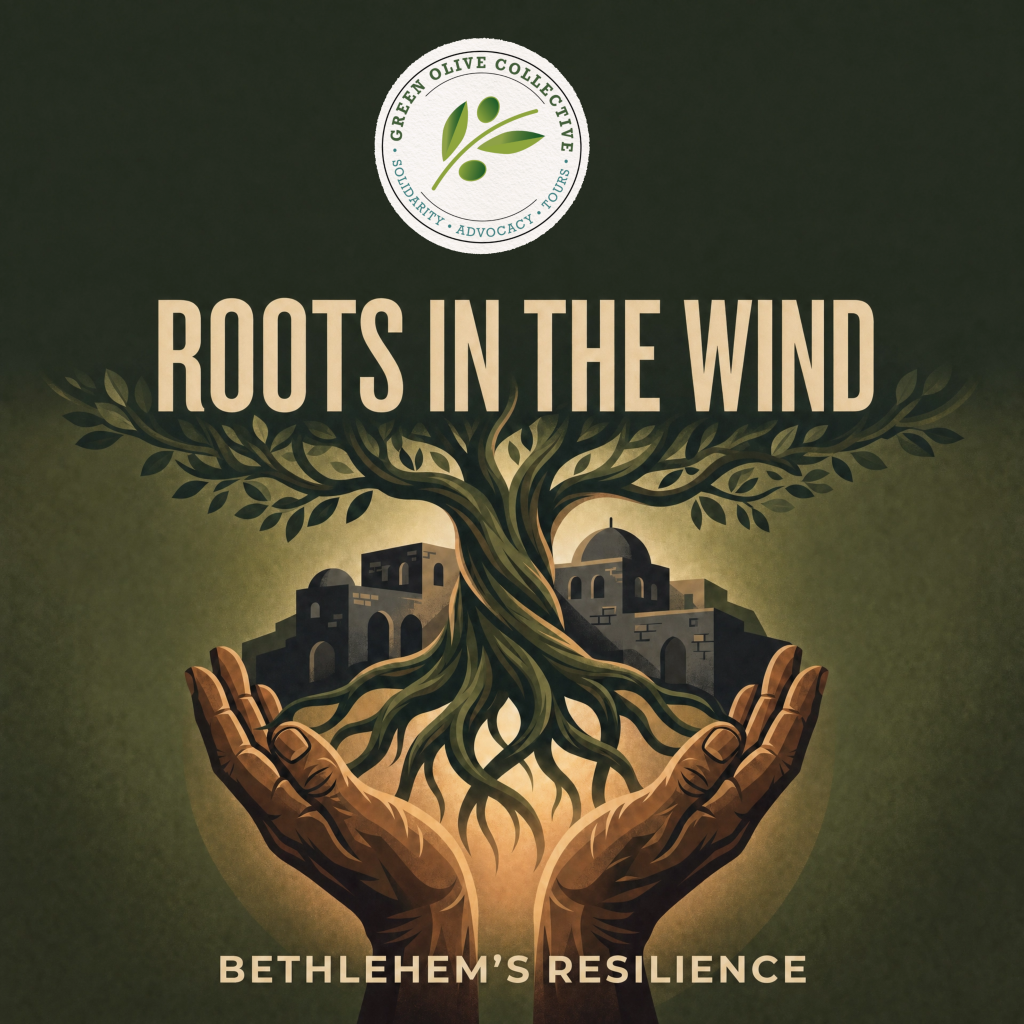
A Palestinian citizen stands in the city of Bethlehem before his land and home, inherited generation after generation, not to cultivate the soil or find shelter within its walls, but to watch with sorrow and regret as barbed wire and the machinery of dispossession consume them.
In that moment, this citizen loses far more than a geographical space, he loses a piece of his soul, his history, and the memory embedded deep within this earth. This harsh scene is not a frame from a dramatic film, but a daily reality lived by Palestinians in the city of Bethlehem, where “the City of Peace” has transformed into isolated islands besieged by the tide of settlement expansion from every direction.
What unfolds today in Palestinian territories, particularly in the city of Bethlehem and its surrounding areas, is no longer merely “land confiscation” in its traditional sense, but rather a redefinition of Palestinian existence itself. In the face of deafening international silence, land has become the ultimate prize pursued by the machinery of Israeli colonialism, employing every tool of oppression and brutality from unjust military laws to the relentless attacks of settlers that know no bounds.
The Language of Shocking Numbers: An Unprecedented Settler Invasion
To understand the magnitude of the catastrophe befalling Palestinian territories, one must confront the language of numbers that reflects a bitter and terrifying reality. In a shocking report from the Wall and Settlement Resistance Commission, a staggering 23,827 attacks were documented in 2025 alone, perpetrated by occupation forces and settlers against Palestinians and their property [1]. This record-breaking figure is not merely a statistic, but a cry of pain reflecting a clear methodology for destroying the foundations of Palestinian life.
These attacks have targeted the agricultural sector intensively, with 1,382 documented incidents including 434 fires set in fields and properties, the uprooting and destruction of over 35,000 trees, predominantly olive trees, which symbolize Palestinian resilience and connection to the land [1]. But the devastation does not end there. Occupation authorities have seized 5,572 dunams of land and approved hundreds of master plans for constructing tens of thousands of new settlement units, a step designed to impose a new demographic and geographic reality that cannot be reversed [1].
Bethlehem and Its Neighbors: Geographical Siege and Historical Distortion
The Bethlehem Governorate, with its strategic location and religious and historical significance, stands as one of the most targeted areas in the Israeli settlement plan. Bethlehem, which should be a beacon of peace and love, finds itself today besieged by a ring of settlements that strangle it and prevent its natural expansion.
In the vicinity of Bethlehem, for example, a new settlement plan emerges in the form of the “Nahal Heletz” settlement, aimed at consuming more Palestinian land and surrounding areas, severing the geographical connection between Palestinian villages and cities [2]. In Beit Sahour, the “Ush Ghrab” area stands as a living testament to ongoing attempts at land seizure, with Palestinians fearing new military orders that will confiscate their land for further settlement expansion [3].
These measures fall within a broader plan known as “Greater Jerusalem,” which aims to annex massive settlement blocs, such as the “Gush Etzion” bloc built on Bethlehem’s land, into the jurisdiction of Jerusalem’s municipality. This plan does not merely confiscate land; it seeks to sever Jerusalem from its Palestinian context, transforming Bethlehem into mere fragmented enclaves [1].
Homes Violated: When Safe Haven Becomes a Target for Assault
The tragic reality in Bethlehem extends far beyond the confiscation of agricultural land; it penetrates to the very heart of Palestinians’ safe refuge: their homes. Repeated attacks on residential houses in the city of Bethlehem and surrounding areas have become a daily phenomenon that robs families of their peace. Whether in the dead of night or broad daylight, Palestinian homes face organized attacks by groups of settlers, with windows shattered by stones, property destroyed, and children and women terrorized.
These attacks on homes are not isolated incidents, but rather part of a psychological and material pressure campaign designed to make daily life for Palestinians in Bethlehem impossible. Families living near settlement blocs or on the city’s periphery find themselves in a constant state of alert, with children denied the simple joy of playing in their own courtyards, and families forced to install iron bars on their windows, transforming their homes into what resembles small prisons. Targeting homes is targeting the sense of security itself, an attempt to break the spirit of the Palestinian citizen within his own sanctuary.
Tales of Earth and Stone: When Memories Are Stolen
Behind every number and statistic lies a human story pulsing with pain and suffering, the story of a person whose breath is intertwined with the soil of his land and the stones of his home. In the city of Bethlehem, many families have endured nightmares that cannot be erased from memory. One morning, members of a family awoke to find their ancestral land, inherited generation after generation, suddenly surrounded by barbed wire and sturdy metal poles [4]. This was not a routine military procedure, but a clear preliminary step toward seizure. Thus, with utter simplicity and cruelty, land watered by generations’ sweat is stolen, and families are prevented from accessing their trees, every branch of which they know, their heritage stripped away.
In other parts of Bethlehem, farmers and residents face additional chapters of daily assault. Here, where the land that sustains the people stretches out, groups of settlers launch repeated attacks. These assaults include terrorizing farmers as they work their fields and attacking their property and homes near the targeted lands [5] [6].
Yet the attackers have not been content with harming people alone. They have extended their reach to steal livestock that represents the lifeblood of these herders, destroy agricultural crops, and poison water wells. These systematic attacks are not mere emotional reactions or isolated incidents, but rather a calculated strategy aimed fundamentally at creating a coercive and hostile environment, forcing Palestinians to abandon their lands and pastures voluntarily or by force, transforming them into easy prey for expansionist settlement projects. It is a daily war of attrition designed to break the farmer’s will and force him to abandon his roots.
Settler Violence: A Tool of Creeping Ethnic Cleansing
Settler violence in the West Bank, particularly in Bethlehem Governorate, is no longer merely isolated incidents or the actions of “angry youths,” as Israeli media machinery attempts to portray it. This violence has become a systematic and institutional state policy, wielded as an effective and rapid tool for silent ethnic cleansing. Credible human rights reports, including those from B’Tselem (the Israeli Information Center for Human Rights in the Occupied Territories), indicate that this unchecked violence, which has escalated dramatically in recent times, has already resulted in the displacement of dozens of Bedouin and pastoral communities from their original settlements, where they had lived for decades [7].
This policy relies on a cunning division of labor, where occupation forces and settlers coordinate in executing these crimes on the ground. The regular military provides security cover and protection for attackers, and sometimes intervenes to suppress Palestinians if they attempt to defend themselves and their property. Simultaneously, official state institutions, particularly the Knesset (Israeli Parliament), enact racist laws and legislation aimed at legitimizing the random settlement outposts established by settlers by force, facilitating and accelerating the seizure of Palestinian land through flimsy legal pretexts such as “state land” or “military purposes.”
We face an integrated colonial system that views Palestinian land as legitimate spoils of war, law as merely a tool for oppression and cloaking crime in false legitimacy, and brute force as a substitute for all international conventions, norms, and human rights [1]. This institutional complicity makes it impossible for the Palestinian farmer to find any authority to appeal to for justice; he faces groups of settlers backed by a complete military and legal arsenal.
The numbers we discussed at the beginning of this article are not mere dry statistics. Each number represents a story of pain; each attack leaves a scar on the body of Palestinian society. When we say that 35,000 olive trees have been uprooted, we speak of 35,000 erased memories, 35,000 stolen livelihoods, 35,000 destroyed symbols of resilience. When we say that 5,572 dunams have been seized, we speak of thousands of families who have lost their sole source of income, and of future generations who will be born without land to inherit from their ancestors.
Solidarity Tourism: An Eye on the Truth
In the face of this dark reality, the role of alternative and solidarity tourism, such as that offered by “Green Olive Tours,” emerges as a vital tool for breaking the imposed isolation on Palestinians and conveying their suffering to the world. Solidarity tourism is not merely an ordinary tourist excursion, but rather a form of civilizational and humanitarian resistance. When a foreign visitor comes to Bethlehem, not to take commemorative photos before the Church of the Nativity, but to stand on confiscated land, to hear the story of a farmer who lost his land, to witness the bitter reality, he becomes a witness to the truth and an ambassador for it in his homeland.
Visiting the city of Bethlehem and surrounding areas should not be limited to classical religious and historical landmarks, but should extend to include witnessing the separation wall that tears the city apart, standing on lands threatened with confiscation, and directly hearing the stories of farmers who struggle daily to survive. These field visits create bridges of deep human compassion and expose the colonial narrative that attempts to obscure the truth. When a foreign visitor sees with his own eyes how ancient olive trees are uprooted and how an elderly farmer is prevented from accessing his field, he transforms from a mere tourist into an eyewitness, and perhaps into an ambassador for truth in his homeland.
Land Is Resistance: Why the Farmer Does Not Surrender
Palestinian resistance cannot be understood without comprehending the depth of the Palestinian’s attachment to his land. Land is not merely pasture or a field one can do without; it is identity itself, living memory, honor and dignity. When a Bethlehem farmer refuses to leave despite immense pressure and constant threats, it is not because he is stubbornly irrational, but because this land is his soul and the meaning of his existence. Therefore, the farmer’s resistance is not economic or political resistance, but rather existential and ontological resistance for survival.
The Palestinian who wakes each morning to work his land, even though he may not return to it in the evening, performs a daily act of quiet yet powerful resistance. With each step toward his field, he says: I am here, I exist, this is my land, and I will remain. This daily steadfastness, this continuous refusal to surrender, is what keeps Palestinian rights alive in the face of systematic attempts to erase them from geography and memory.
But we must be clear: this steadfastness cannot continue indefinitely without genuine international support and global solidarity. The Palestinian farmer does not need pity or sympathy; he needs justice, genuine international protection, pressure on the international community to enforce respect for international law and human rights conventions that prohibit ethnic cleansing and forced settlement. Palestinian farmers need global voices defending their rights, strong human rights organizations documenting violations, and international opinion leaders who refuse to remain silent about this human tragedy.
Steadfastness Despite Siege: A Message from Bethlehem to the World
Despite the harshness of the scene and the darkness of the picture, the Palestinian farmer in the city of Bethlehem and surrounding areas remains clinging to his land like an ancient olive tree refusing to break before the storms. This legendary steadfastness is not merely a choice, but a matter of life or death, the highest expression of rejection of ethnic cleansing and erasure schemes.
From here, from the heart of suffering in Bethlehem, we send a powerful message to all visitors of “Green Olive Tours” and all free people of the world: genuine solidarity with the Palestinian people begins with understanding their bitter reality and standing beside them in their just struggle for survival and dignified life. Palestinian land is not merely a geographical space of conflict, but the heart and essence of the cause, and its protection is an ethical and humanitarian responsibility that falls upon the entire international community.
Every visit to Bethlehem, every conversation with a Palestinian farmer, every photograph published documenting the reality, is a step toward breaking the media and political siege. Every voice raised in defense of Palestinian rights is a small but important victory. Let us not leave the Palestinian farmer alone in facing this tide of settlement; in his steadfastness lies the survival of justice, and in his voice echoes a call for the long-awaited justice. Bethlehem, the City of Peace, deserves to return to what it once was: a city of peace and justice, not a city of siege and settlement.

Comment (0)