
Jocelyn Qassis – May 2026
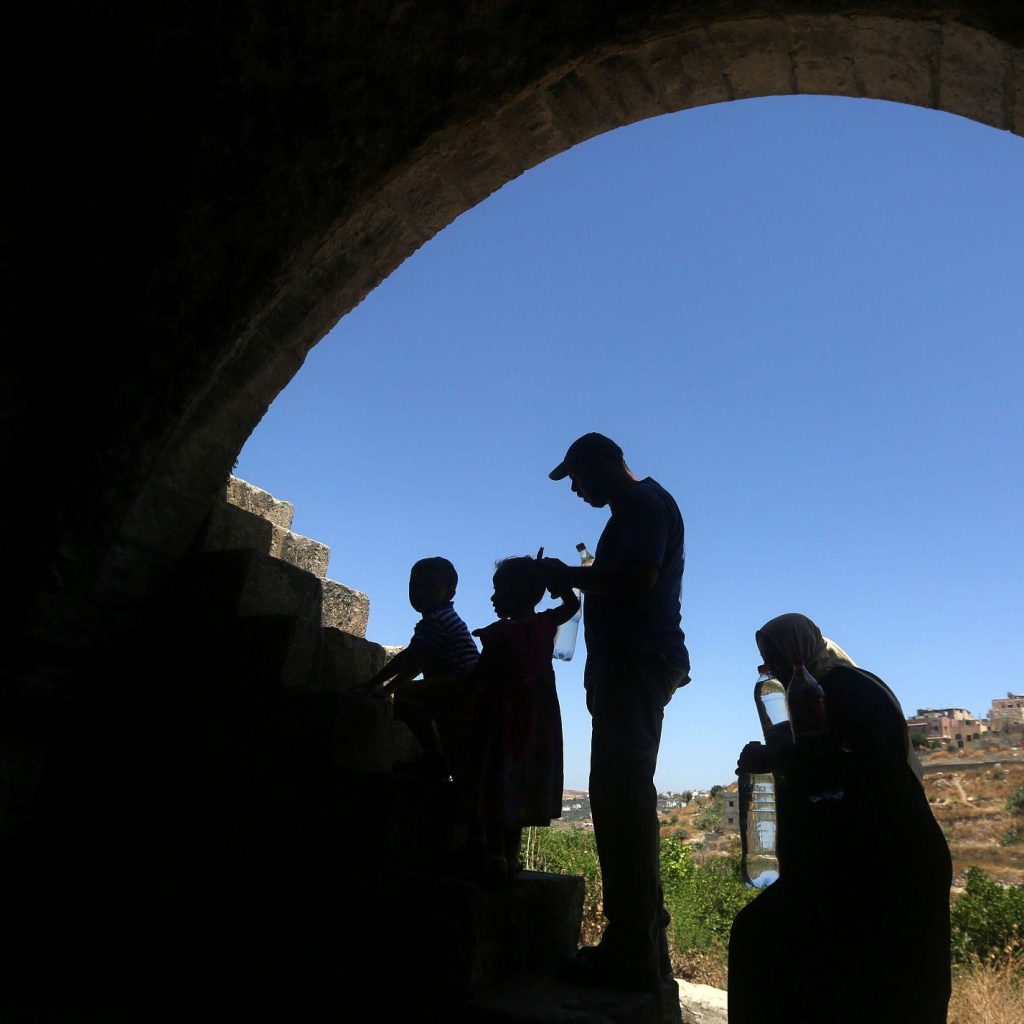
The water crisis in Palestine is not merely an environmental or developmental issue. It is one of the clearest manifestations of structural inequality and systematic domination imposed on Palestinians for decades. Water, which should exist as a universal human right guaranteed to all people without discrimination, has been transformed under the Israeli occupation into a mechanism of control, collective punishment, and forced displacement. Through restrictive military policies, infrastructure destruction, and discriminatory allocation systems, Palestinians are denied equitable access to one of the most essential elements of life itself.
This crisis reaches far beyond shortages in supply. It strikes at the core of Palestinian survival, public health, agriculture, economic resilience, and the ability of communities to remain on their land.
Water Apartheid and Systematic Control in the West Bank
In the Occupied West Bank, Israel exercises overwhelming control over shared water resources through a deeply unequal system often described by human rights organizations as “water apartheid.” Since the occupation of the West Bank in 1967, Israeli authorities have issued a vast network of military orders that transferred authority over Palestinian water resources to the Israeli military administration. Palestinians are prohibited from drilling new wells, rehabilitating old ones, or developing water infrastructure without permits that are almost impossible to obtain. At the same time, Israeli settlements built illegally under international law continue to expand freely, receiving uninterrupted water access and modern infrastructure.
Israel currently controls approximately 85% of the shared groundwater resources in the West Bank, including the Mountain Aquifer, which represents one of the region’s most important freshwater sources. Palestinian communities are left with severely restricted quotas that fail to meet even basic human needs. According to available data, the average Palestinian in the West Bank consumes approximately 85.7 liters of water per day, below the minimum level recommended by the World Health Organization. Meanwhile, Israeli settlers consume between 300 and 400 liters daily, benefiting from swimming pools, irrigated lawns, and water intensive agricultural projects built on occupied land [1].
The inequality becomes even more severe in rural Palestinian communities, particularly in areas classified as “Area C,” which remain under full Israeli military control. Villages in regions such as Masafer Yatta, the Jordan Valley, and South Hebron Hills frequently survive on less than 20 liters of water per person per day. Residents are often forced to purchase water transported by trucks at prices several times higher than the regular network cost. Many families spend a significant percentage of their monthly income securing water alone. During summer months, entire communities face prolonged water cuts while nearby settlements continue receiving uninterrupted supply.
The targeting of water infrastructure has also become a recurring practice. Palestinian rainwater harvesting systems, agricultural wells, and storage tanks are frequently demolished under the pretext of lacking permits. Human rights groups have documented numerous incidents in which Israeli forces confiscated water tanks and destroyed pipelines serving vulnerable Bedouin communities. These policies are not isolated administrative measures. They function as part of a broader strategy aimed at making life unsustainable for Palestinians in strategic areas targeted for settlement expansion.
The Impact on Agriculture and Food Security
Water restrictions directly undermine Palestinian agriculture, which historically formed a central pillar of the Palestinian economy and cultural identity. Palestinian farmers face enormous challenges irrigating crops, sustaining olive groves, and maintaining livestock. Entire agricultural areas suffer from declining productivity due to lack of water access and restrictions on developing irrigation systems.
In the Jordan Valley, often described as the food basket of Palestine, Israeli policies have severely limited Palestinian agricultural growth while supporting large scale settlement farming operations that export produce internationally. Palestinian farmers frequently witness nearby settlement farms using abundant irrigation networks while their own lands dry out. This disparity deepens poverty and unemployment while increasing dependence on imported goods.
The consequences extend beyond economics. Agriculture in Palestine is deeply tied to identity, heritage, and the relationship between Palestinians and their land. Restricting water access weakens the ability of communities to remain rooted in their villages and contributes to gradual displacement.
Gaza: Water as a Weapon of War
The situation in the Gaza Strip represents one of the gravest water and humanitarian crises in the modern world. Even before the recent escalation of violence, Gaza suffered from years of blockade, infrastructure collapse, electricity shortages, and severe groundwater contamination. The coastal aquifer, Gaza’s primary natural water source, had already become heavily polluted due to over extraction, sewage infiltration, and seawater intrusion. Reports indicated that more than 97% of Gaza’s groundwater was unfit for human consumption.
Following the recent military assaults, conditions deteriorated catastrophically. Large portions of Gaza’s water and sanitation infrastructure were destroyed through bombardment. Water treatment facilities, sewage systems, desalination plants, pipelines, and wells were either damaged or completely rendered nonfunctional. Humanitarian organizations reported that approximately 70% of water and sanitation infrastructure suffered destruction or severe damage, leaving hundreds of thousands of Palestinians without reliable access to clean water.
Water in Gaza has effectively become a weapon of war. Israeli authorities repeatedly cut off water supplies entering the Strip and restricted fuel deliveries necessary for operating pumps, wells, and desalination systems. Hospitals, shelters, and residential neighborhoods struggled to obtain even minimal quantities of clean water. Families were forced to consume contaminated water, increasing outbreaks of diarrhea, skin diseases, hepatitis, and other waterborne illnesses, especially among children.
The destruction of major water reservoirs and pipelines intensified the catastrophe. Human rights organizations documented attacks on critical civilian infrastructure, including reservoirs such as the Canada reservoir in Rafah. Such actions violate international humanitarian law, which explicitly prohibits targeting infrastructure indispensable for civilian survival. In some areas of Gaza, water shortages reached nearly 90%, making basic hygiene impossible and increasing the risk of widespread epidemics.
Children in Gaza bear a particularly devastating burden. Dehydration, malnutrition, and water contamination threaten an entire generation. The collapse of sanitation systems has led to sewage overflow in densely populated areas, creating conditions ripe for disease outbreaks. Access to clean drinking water has become one of the population’s most urgent survival needs.
Health, Dignity, and Human Survival
The Palestinian water crisis cannot be separated from broader questions of human dignity and public health. Water scarcity affects every aspect of daily life. Families reduce hygiene practices to conserve water. Schools and healthcare facilities struggle to operate safely. Women and children often carry the burden of collecting and managing limited water supplies. Poor sanitation conditions increase health risks, especially in overcrowded refugee camps and marginalized rural communities.
The crisis also deepens social and economic inequality. Wealthier households may afford purchased water deliveries or filtration systems, while poorer communities remain exposed to unsafe sources. The inability to secure clean water reinforces cycles of poverty and vulnerability.
International law recognizes access to safe drinking water and sanitation as a fundamental human right. The United Nations General Assembly affirmed this right in 2010, emphasizing that clean water is essential for the realization of all human rights. In the Palestinian case, the denial of water access represents not only a humanitarian issue but also a political system that restricts Palestinians’ ability to exercise sovereignty over their natural resources and sustain independent development.
Legal Violations and International Accountability
Numerous legal experts and international organizations argue that Israeli water policies violate international humanitarian law, international human rights law, and principles governing occupied territories. The occupying power is obligated under the Fourth Geneva Convention to ensure the welfare and survival of the occupied population. Instead, the current system institutionalizes discrimination and unequal allocation.
More than 108 Israeli military orders regulate Palestinian access to water resources, severely limiting independent management and infrastructure development. Palestinians are denied meaningful control over their aquifers while settlement expansion continues uninterrupted. The extraction and diversion of natural resources from occupied territory for the benefit of the occupying population violates established international legal principles.
The use of starvation and deprivation of water as methods of warfare may constitute war crimes under the Rome Statute of the International Criminal Court. International legal scholars increasingly argue that systematic destruction of civilian infrastructure and deliberate obstruction of humanitarian access require urgent investigation and accountability.
Despite repeated international criticism, effective enforcement mechanisms remain absent. Statements of concern have rarely translated into meaningful political pressure capable of changing realities on the ground. As a result, Palestinians continue facing worsening humanitarian conditions while impunity persists.
A Struggle for Existence and Justice
For Palestinians, the struggle for water is inseparable from the struggle for freedom, dignity, and existence on their land. Water scarcity is not simply the result of climate conditions or natural limitations. Palestine historically possesses significant shared water resources. The crisis stems largely from unequal control, discriminatory policies, and restrictions imposed through military occupation.
The international community faces an urgent moral and legal responsibility to act. This includes pressuring Israel to end discriminatory water policies, guaranteeing Palestinians equitable access to shared water resources, protecting civilian infrastructure, and supporting the reconstruction of Gaza’s devastated water systems. Long term solutions require recognition of Palestinians’ rights to manage their own natural resources free from coercion and military domination.
Without meaningful intervention, the water crisis will continue deepening humanitarian suffering, destabilizing communities, and threatening the survival of Palestinians across both the West Bank and Gaza. Access to water is not a privilege granted by political power. It is a fundamental human right tied directly to life itself.
References:
[1] Water at the intersection of human rights and conflict: a case study of
[2] Israeli occupation pressures West Bank by reducing water share
[3] PALESTINIANS DENIED FAIR ACCESS TO WATER
[4] Targeting of water and sanitation sector in the period between March 2024
[5] Decreasing drinking water sources in Gaza, fears of disease outbreak – UN News – [6] Gaza on the brink of health collapse: a catastrophic crisis threatening the lives of thousands of patients

Comment (0)